Reclaimed time needs a destination
It is easy to imagine gaining an hour and harder to decide what that hour should become. Without a gentle plan, reclaimed time often gets absorbed by the next message, errand, request or tired habit. That does not mean you failed. It means open time is valuable, and other demands are very good at finding it.
Protecting time is not about making every evening impressive. It is about choosing one small recurring moment that deserves a little more space. It might be an unrushed meal, a walk, a class, a call, a book, an early night, a creative project or an hour with no plan at all. The shape is personal; the practice is simply to give it a place before the week gets busy.
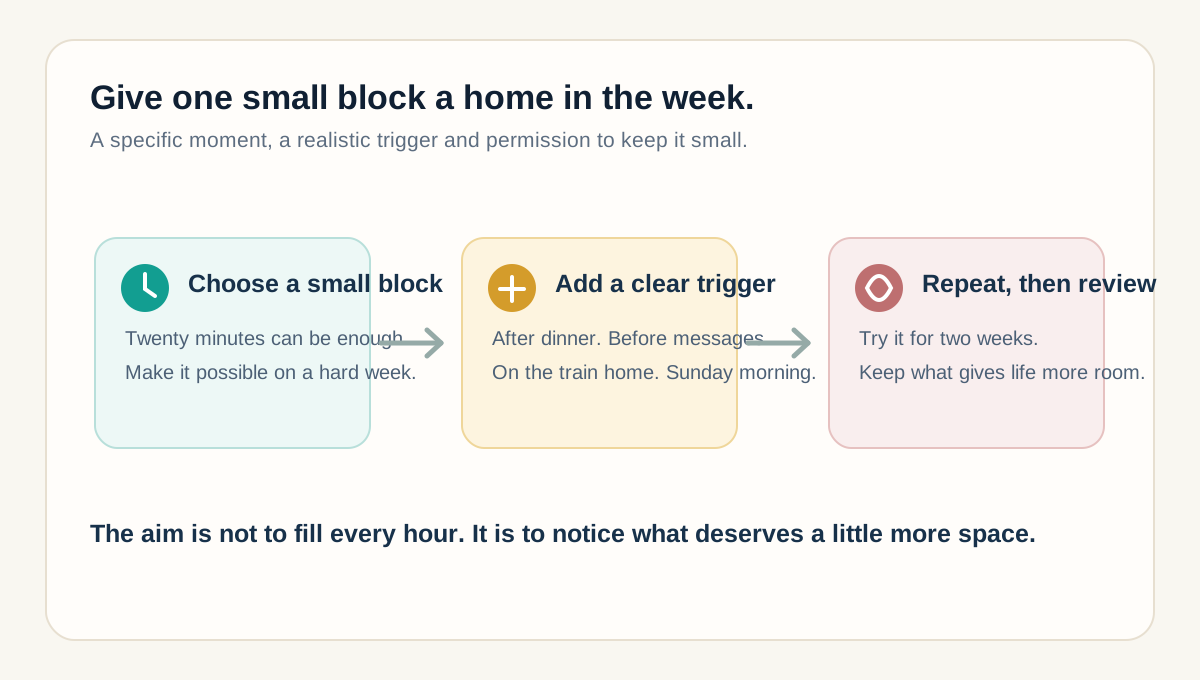
Choose a life-sized block
Begin smaller than your ambition. A two-hour block every day may sound inspiring and then collapse under normal life. Twenty minutes twice a week may be far more real. Choose a block that survives a difficult week, not just a perfect one.
For example: “On Tuesday and Thursday, after dinner, I will walk for 20 minutes before opening social apps.” Or: “Sunday morning until 10 is for breakfast and a family call, unless someone needs urgent help.” The trigger makes the intention easier to remember. The small size makes it easier to honour.
Three ways to make the first attempt easier
Protect an existing moment
Instead of inventing more time, choose a moment that already happens and make it slightly more intentional: the walk home, the first coffee, the school run, a lunch break or the hour after dinner.
Reduce one source of friction
Prepare the small thing that usually gets in the way. Put shoes by the door, choose the book in advance, share the plan with someone at home or decide which notification can wait.
Leave room for a different answer
If the block does not work, make it smaller, move it or change what it is for. A protected hour is not a test of character. It is an experiment in making life feel a little more like your own.
Pick one of four kinds of time
- Recovery time: rest, sleep preparation, a quiet bath, stretching, a walk or doing less on purpose.
- Relationship time: a regular meal, a call, a shared activity, a school pickup without rushing, or being fully present for an hour.
- Growth time: reading, learning, making, movement, practice or a project that matters beyond the week.
- Open time: a deliberately unassigned pocket where nothing has to be achieved.
You do not need one of each. In a demanding season, recovery may be the only honest answer. In a quieter season, relationship or growth time may feel more important. The category can change as life changes.
Use the weekend without overloading it
Weekends can feel like the whole reward for a busy week, which is why they easily become crowded with chores, errands and the pressure to make memories. A calmer approach is to protect one anchor rather than trying to optimise two whole days. An anchor might be a slow Saturday morning, an afternoon outdoors, a shared Sunday meal or one evening that stays free.
Look at the remaining weekends guide not as a count to worry about, but as a reminder that ordinary recurring rituals matter. A modest plan repeated across many weekends can become a meaningful part of a life.
Make trade-offs visible, kindly
Protected time always costs something: perhaps another task moves, a screen habit changes, a journey is shortened, a work boundary is stated or an invitation is declined. The question is not whether you can avoid trade-offs. It is whether the trade-off matches what you care about right now.
The My Remaining Free Time and Screen Time guides can help turn a recurring change into a visible number. Use that number as a prompt, not a promise. “Forty-five minutes most days” is not a life transformation by itself. It is a workable place to begin.
A two-week experiment
Choose one protected block and run it for two weeks. Tell anyone affected by it, where that feels appropriate. Prepare the smallest practical support: put a book by the chair, arrange the walk route, set a gentle alarm, cook something simple, or decide in advance which notification can wait.
After two weeks, ask: Did this make life feel more spacious, more connected or more like mine? If yes, keep it. If no, change the time of day, reduce the size or choose a different category. The point is not discipline for its own sake. It is to make the time you value a little easier to reach.
When nothing feels protectable
There are seasons when every block already belongs to work, care, health or survival. In those moments, protecting time may mean lowering the bar: five minutes outside, a message to someone you miss, an earlier bedtime, asking for help, or naming that the current load is unsustainable. The language of “making the most of time” should never become another demand on a person who is already carrying too much.
Frequently asked questions
What if someone else controls most of my schedule?
Start with the smallest part you can influence, then use the clearer picture to have a conversation about workload, support or shared responsibilities where it is safe to do so.
Does protected time have to be productive?
No. Rest, connection and doing nothing can be the whole point. Protected time is about intention, not output.
Should I use this to cut sleep?
No. Sleep is essential care. Look first at friction, routine or optional commitments rather than treating sleep as spare time.